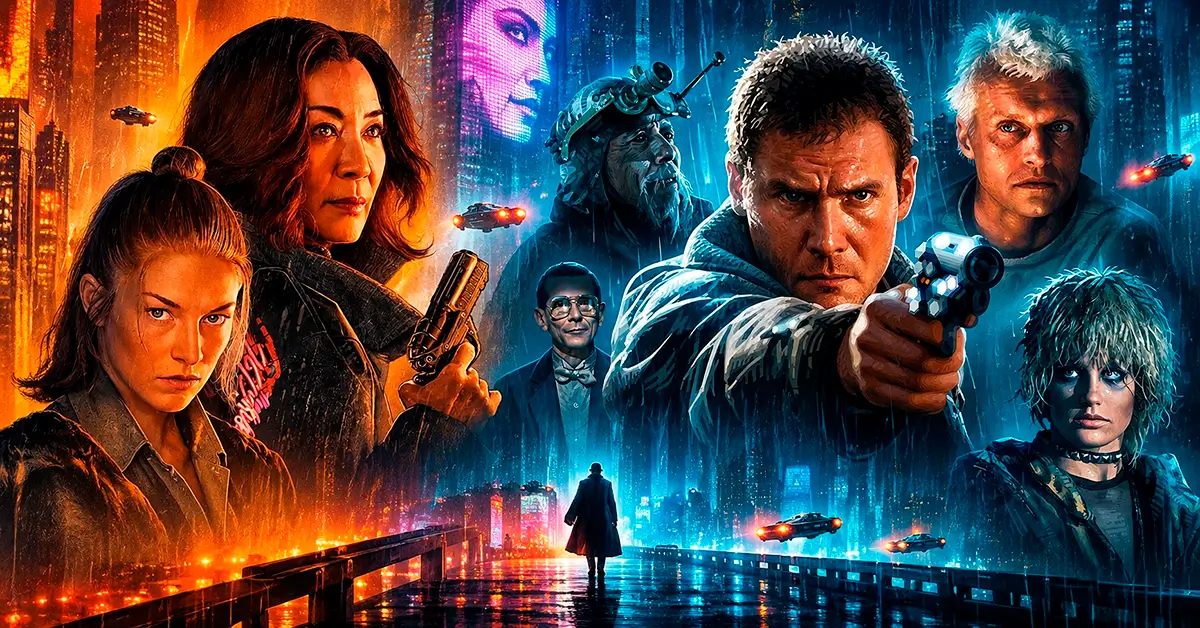
Blade Runner 2099 premieres on Prime Video on November 25, 2026, with all eight episodes released simultaneously. Set 50 years after the events of Blade Runner 2049, the series continues a franchise that took decades to earn the recognition it enjoys today. Released in 1982, the original film underperformed at the box office, while its 2017 sequel also struggled commercially. Here’s a look back at the franchise’s history and the key events leading up to the arrival of the new production.
Blade Runner (1982): The Film That Flopped Before Becoming a Cult Classic
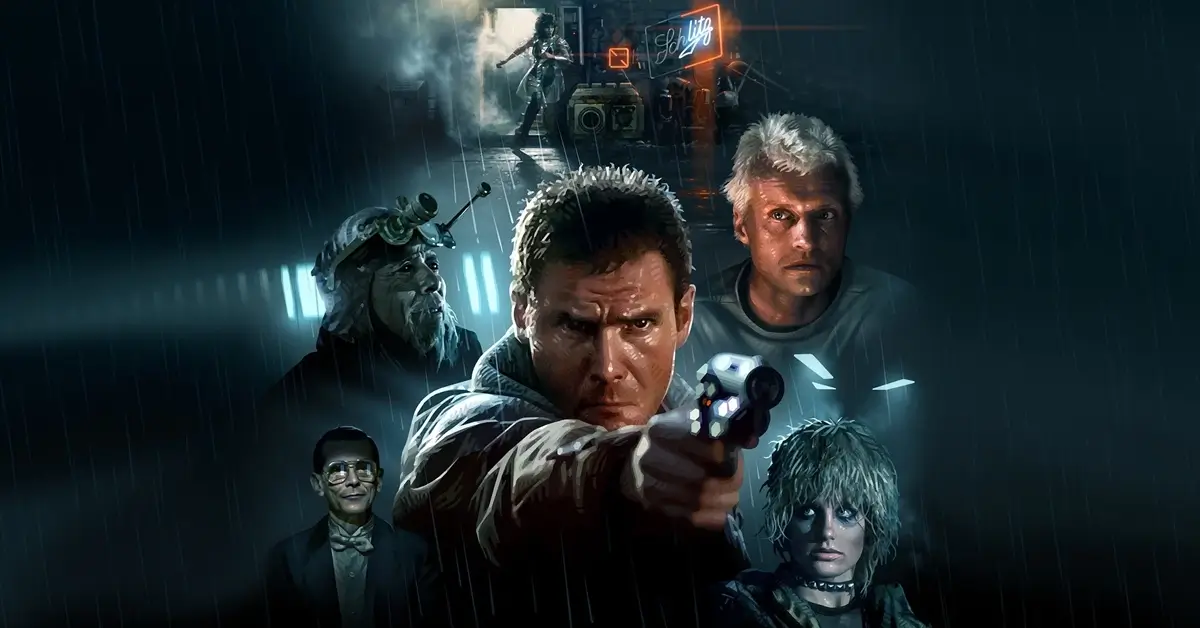
Blade Runner premiered on June 25, 1982, directed by Ridley Scott and written by Hampton Fancher and David Peoples. The film is a loose adaptation of Philip K. Dick’s 1968 novel Do Androids Dream of Electric Sheep?. With an estimated budget of $30 million, it grossed approximately $41.6 million worldwide. In its opening weekend in the United States, it finished in second place at the box office, behind E.T. the Extra-Terrestrial.
Related: Blade Runner | The Villain Is the Hero of the Movie
The Plot
The story takes place in Los Angeles in November 2019. The Tyrell Corporation manufactures replicants, artificial beings virtually identical to humans who are used as labor in off-world colonies. Replicants are banned on Earth, and a special police unit known as the blade runners is responsible for tracking down and “retiring” those who escape.
Rick Deckard (Harrison Ford), a former blade runner who has left the force, is forced back into service by Chief Bryant. Four Nexus-6 replicants have escaped from an off-world colony and arrived in Los Angeles: Roy Batty (Rutger Hauer), the group’s leader; Pris (Daryl Hannah); Zhora (Joanna Cassidy); and Leon (Brion James). With a lifespan limited to four years, they are searching for a way to extend their existence.
During his investigation, Deckard visits the Tyrell Corporation to learn how to identify the fugitives. There, he meets Rachael (Sean Young), assistant to the company’s founder, Eldon Tyrell (Joe Turkel). After administering the Voight-Kampff test, which detects replicants through their emotional responses, Deckard discovers that Rachael is also a replicant. However, she has been implanted with artificial memories and is unaware of her true identity.
As the pursuit continues, Deckard tracks down and retires Zhora and Pris. Leon, who attempts to attack the blade runner, is killed by Rachael. Meanwhile, Roy manages to reach Eldon Tyrell with the help of J.F. Sebastian (William Sanderson), a genetic engineer who lives in an abandoned building. After learning that there is no way to extend his lifespan, Roy kills the creator of the replicants.
In the final confrontation, Roy chases Deckard through the building. Just as the blade runner is about to fall, the replicant saves him. Shortly afterward, Roy dies as he reaches the end of his programmed lifespan. Gaff (Edward James Olmos), the police officer overseeing the investigation, leaves a unicorn origami figure in Deckard’s apartment. The object fuels the theory that Gaff knows about Deckard’s thoughts and memories. Deckard subsequently escapes the city with Rachael.
Why Are There So Many Versions of Blade Runner?
Over the years, Blade Runner has received several different cuts. There are seven known versions, including workprint screenings, theatrical releases, television edits, and revised editions. Some of the most significant versions include:
- U.S. Theatrical Cut (1982): Features Deckard’s voice-over narration and a more optimistic ending, both added after a negative response to an early test screening.
- International Cut (1982): Similar to the U.S. theatrical version but includes additional scenes of violence.
- Director’s Cut (1992): Removes the voice-over narration and the happy ending while introducing the unicorn dream sequence.
- The Final Cut (2007): Released to celebrate the film’s 25th anniversary, this is the version over which Ridley Scott had complete creative control.
The unicorn sequence is at the center of one of the film’s biggest debates: Is Deckard a replicant? The movie leaves room for different interpretations. Ridley Scott believes he is, while Harrison Ford has consistently disagreed with that interpretation.
Over time, the film underwent a critical reassessment and earned its status as a science fiction classic. In 1993, it was selected for preservation in the United States National Film Registry. At the time of its release, it received two Academy Award nominations, for Art Direction and Visual Effects, but did not win either award.
The Short Films and Anime Connecting Blade Runner (1982) to 2049
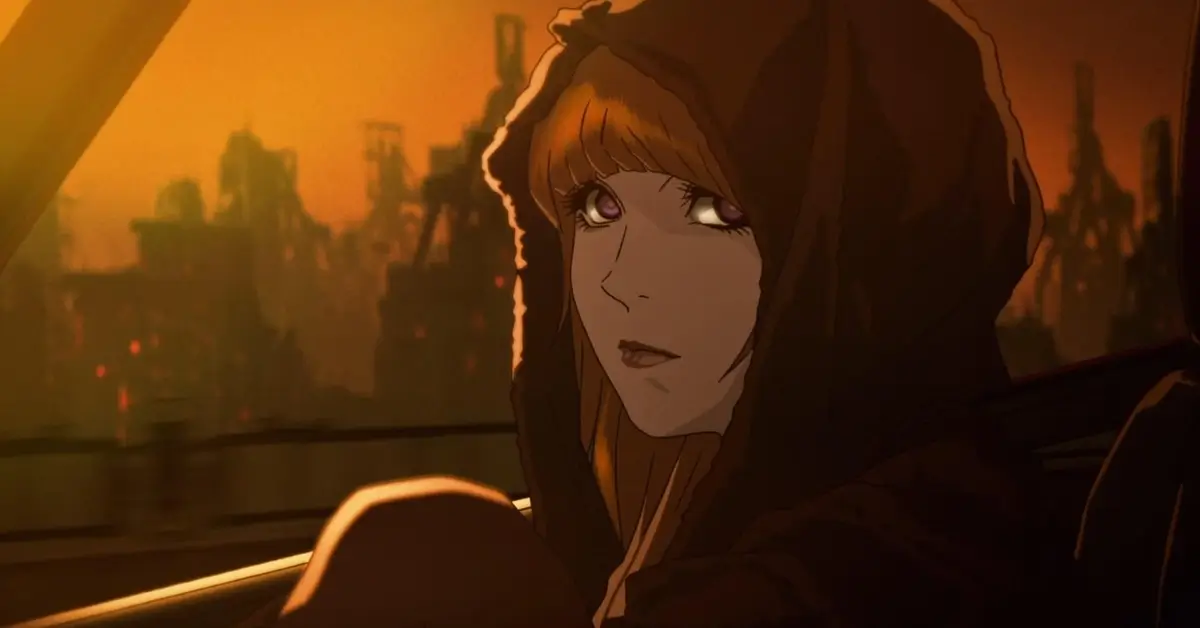
Before Blade Runner 2049 arrived in theaters, three short films released in 2017 helped fill in the 30-year gap between the events of the original movie and its sequel. These productions explore important developments that help explain the changes in that universe and the emergence of a new generation of replicants.
- Black Out 2022: Directed by Shinichirō Watanabe, best known for works such as Cowboy Bebop, this anime short premiered on September 27, 2017, on Crunchyroll, featuring a score by Flying Lotus. Set three years after the original film, it follows a blackout in Los Angeles triggered by an operation involving replicants. The incident has major consequences for this universe, including the collapse of the Tyrell Corporation and the ban on manufacturing new replicants.
- 2036: Nexus Dawn: Directed by Luke Scott, Ridley Scott’s son, this short introduces Niander Wallace (Jared Leto), a businessman who takes control of the remaining assets of the Tyrell Corporation. During a presentation to a government committee, Wallace demonstrates the capabilities of the Nexus-9 replicants, designed to obey humans, and attempts to convince officials to lift the ban on their production.
- 2048: Nowhere to Run: Also directed by Luke Scott, this short follows Sapper Morton (Dave Bautista), a replicant living in isolation who tries to keep a low profile. His routine is disrupted when he gets into a fight while protecting a mother and her daughter, drawing the attention of the authorities.
In 2021, the franchise expanded further with the animated series Blade Runner: Black Lotus. Set in 2032, the show takes place 17 years before Blade Runner 2049 and explores another story involving replicants and the influence of the Wallace Corporation in this futuristic universe.
Blade Runner 2049 (2017): The Sequel That Also Struggled at the Box Office
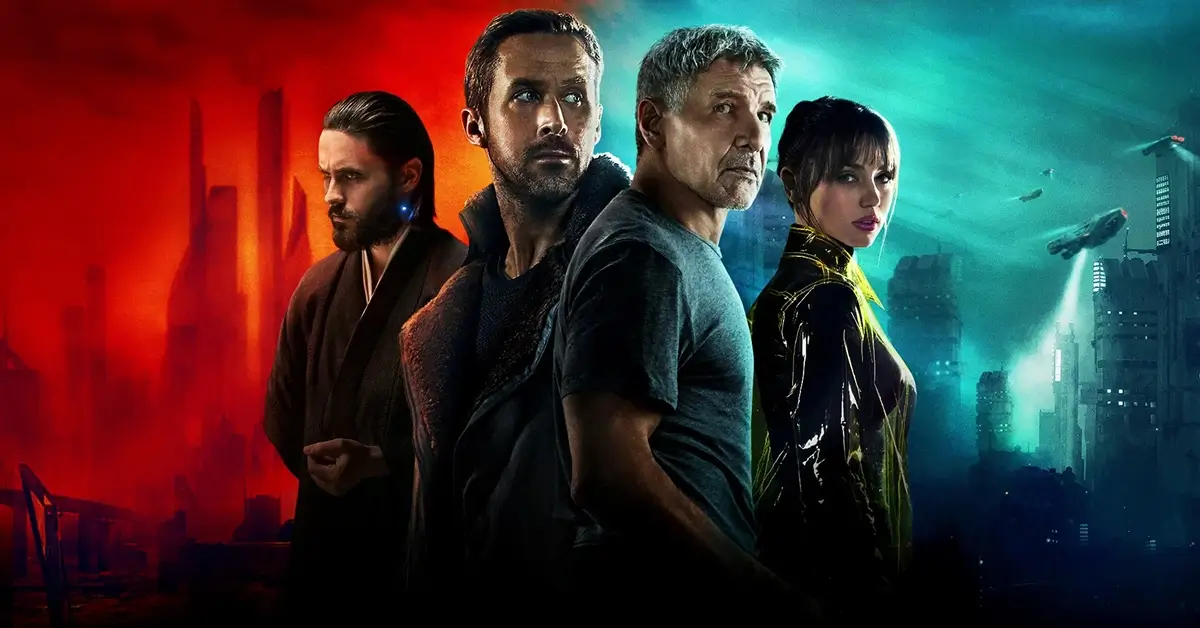
Thirty-five years after the original film’s release, Blade Runner 2049 arrived in theaters in October 2017, directed by Denis Villeneuve. The screenplay was written by Hampton Fancher, one of the writers of the original movie, alongside Michael Green. Harrison Ford returned as Rick Deckard, while Ryan Gosling took on the leading role as a new blade runner.
The Plot
In 2049, Earth is facing a severe environmental and social collapse. Following the fall of the Tyrell Corporation, Niander Wallace (Jared Leto) takes control of replicant production and develops models programmed to obey humans. Among them is K (Ryan Gosling), a Nexus-9 blade runner assigned to track down and retire older generations of replicants.
During a mission to retire Sapper Morton (Dave Bautista), K discovers a buried box near a farm. Inside are the remains of a replicant who died during childbirth. The discovery reveals that Rachael was able to give birth to a child, an event considered biologically impossible and one that could permanently change the relationship between humans and replicants.
Concerned about the consequences of this discovery, Lieutenant Joshi (Robin Wright), K’s superior, orders him to find and eliminate the child to prevent a potential conflict. During his investigation, the agent uncovers clues leading to the Wallace Corporation and a childhood memory involving a hidden wooden horse. Convinced that the memory might be his own, K begins to believe he is the child of Rachael and Deckard.
The investigation leads him to Dr. Ana Stelline (Carla Juri), a specialist responsible for creating artificial memories. She confirms that K’s memory is real but belongs to someone else. Eventually, the agent discovers that Stelline herself is the child everyone is searching for.
Meanwhile, Luv (Sylvia Hoeks), Wallace’s assistant, kills Joshi, kidnaps Deckard, and attempts to take him off-world. K manages to rescue the former blade runner after confronting Luv and eventually brings Deckard to the place where his daughter lives. Father and daughter are finally reunited, while K, wounded, dies in the snow outside the building.
Reception and Awards
Running 2 hours and 44 minutes, Blade Runner 2049 opened with approximately $32 million at the U.S. box office. Despite receiving positive reviews from critics, the film failed to meet commercial expectations. Its worldwide box office totaled approximately $267 million, against an estimated production budget of $150 million to $185 million.
The film’s disappointing box office performance stood in contrast to its recognition during awards season. Blade Runner 2049 received five Academy Award nominations and won two Oscars: Best Cinematography for Roger Deakins and Best Visual Effects.
Director Denis Villeneuve also publicly addressed the film’s commercial performance. In a 2017 interview with Yahoo Entertainment, he said, “I’m still digesting it,” referring to the movie’s box office results.
Blade Runner 2099: What to Expect from the New Prime Video Series

Blade Runner 2099 takes the franchise to Los Angeles, 50 years after the events of Blade Runner 2049. The story unfolds in a world marked by a replicant uprising, following which humans have become second-class citizens.
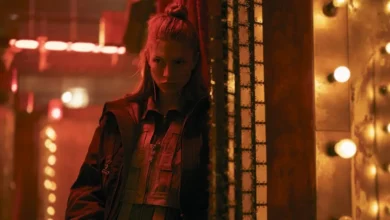
Michelle Yeoh stars as Olwen, a replicant and blade runner who is nearing the end of her life. Hunter Schafer plays Cora, a human fugitive who assumes the identity of a blade runner. The two join forces to investigate a conspiracy threatening the city.
The series was created by Silka Luisa, best known for her work on Shining Girls, who also serves as showrunner. Ridley Scott and Michael Green were involved in the project’s development, while Jonathan van Tulleken, known for Shōgun, directed the first two episodes.
The cast also includes Tom Burke, Johnny Harris, Amy Lennox, Sheila Atim, Matthew Needham, Dimitri Abold, and Lewis Gribben. Regarding the show’s visual identity, Luisa described its aesthetic as “sunshine noir,” a brighter approach compared with the constant rain and darkness of the original film.
Prime Video will release all eight episodes of Blade Runner 2099 simultaneously on November 25, 2026. The series is scheduled to premiere in more than 240 countries and territories, including the United States, with multiple audio and subtitle options.
What Is the Best Order to Watch the Blade Runner Franchise?
There are two ways to explore the Blade Runner universe: by release order or by chronological order. For newcomers, watching the productions in release order is the recommended approach, as it allows viewers to experience the story as it originally unfolded for audiences.
Release Order
- Blade Runner (1982): The original film directed by Ridley Scott.
- Blade Runner 2049 (2017): The sequel directed by Denis Villeneuve, set 30 years after the events of the first movie.
- Blade Runner 2099 (2026): The Prime Video series that continues the franchise, 50 years after the events of Blade Runner 2049.
Chronological Order
- Blade Runner (2019): The beginning of Rick Deckard’s story.
- Blade Runner: Black Out 2022 (2022): Animated short directed by Shinichirō Watanabe.
- Blade Runner: Black Lotus (2032): Animated series that expands the franchise’s universe.
- 2036: Nexus Dawn (2036): Short film introducing the new replicants developed by Niander Wallace.
- 2048: Nowhere to Run (2048): Short film centered on replicant Sapper Morton.
- Blade Runner 2049 (2049): The sequel starring Ryan Gosling and Harrison Ford.
- Blade Runner 2099 (2099): The series exploring a new chapter in this futuristic universe.
The short films and animated series expand the franchise’s mythology and help explain the political, technological, and social changes that take place between the movies. However, these productions are not essential to understanding Blade Runner 2099. Watching the two main feature films already provides enough background to follow the universe presented in the new series.
Frequently Asked Questions About Blade Runner
When does Blade Runner 2099 premiere?
Blade Runner 2099 premieres on November 25, 2026, on Prime Video, with all eight episodes available simultaneously.
Do I need to watch the movies before the series?
The series takes place 50 years after Blade Runner 2049. Watching the two main films helps viewers understand the background of the replicants, the Tyrell Corporation, and the Wallace Corporation. The short films and animated series provide additional context but are not essential.
Will Blade Runner 2099 have a second season?
The production was conceived as a limited series with a self-contained story. As of now, there has been no confirmation of a second season.
Are Harrison Ford and Ryan Gosling in Blade Runner 2099?
Harrison Ford and Ryan Gosling are not among the names listed in the announced main cast of Blade Runner 2099.
Which version of Blade Runner should I watch?
Blade Runner: The Final Cut (2007) is considered the definitive version by Ridley Scott. This edition represents the director’s preferred vision of the 1982 classic. Streaming availability may vary, so check current services in your region to see where the different versions are available.
Who created Blade Runner 2099?
The series was created by Silka Luisa, who also serves as showrunner. Ridley Scott, director of the original film, and Michael Green were also involved in the project’s development.